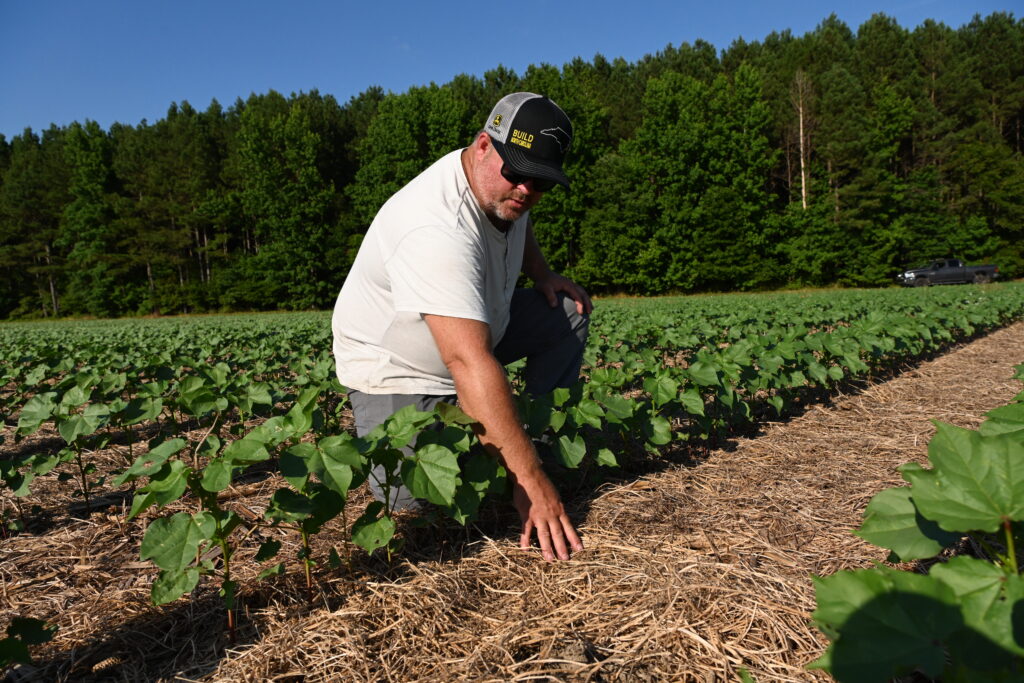
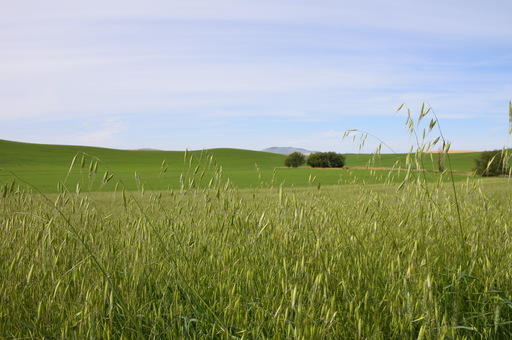
Cover crops have proven they can smother weeds, but that suppression depends on two factors: their biomass accumulation and when they are terminated. Terminating too early can halt biomass — and weed suppression — in its tracks. Terminating too late can harm the cash crop. So Virginia Tech researchers knew they had their work cut out for them when Virginia corn farmers asked how late they should terminate their cover crops without tanking yields.
Choose a cover crop species with a booming biomass, and terminate around a week or two before corn planting to maximize your weed suppression and protect your corn yield.
Dr. Vijay Singh
The resulting study found that hairy vetch and cereal rye are biomass-producing beasts, but it’s important to terminate your cover crop one or two weeks before planting corn, to avoid harming corn yield, according to Dr. Vijay Singh and then-Virginia Tech graduate student, Vipin Kumar.
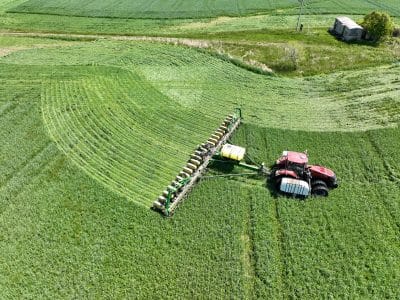
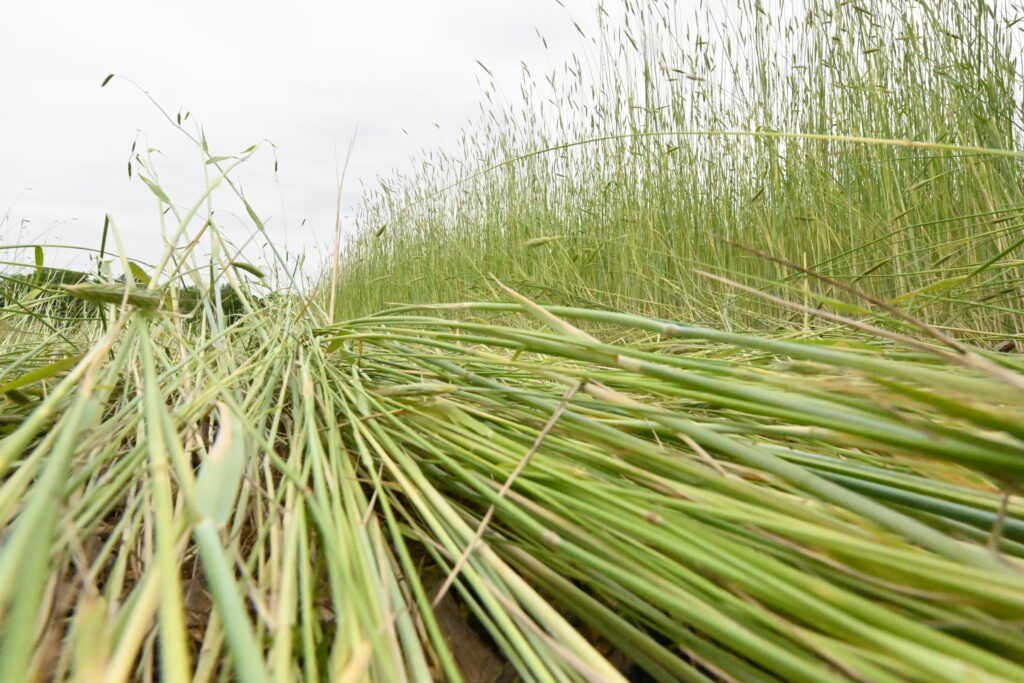
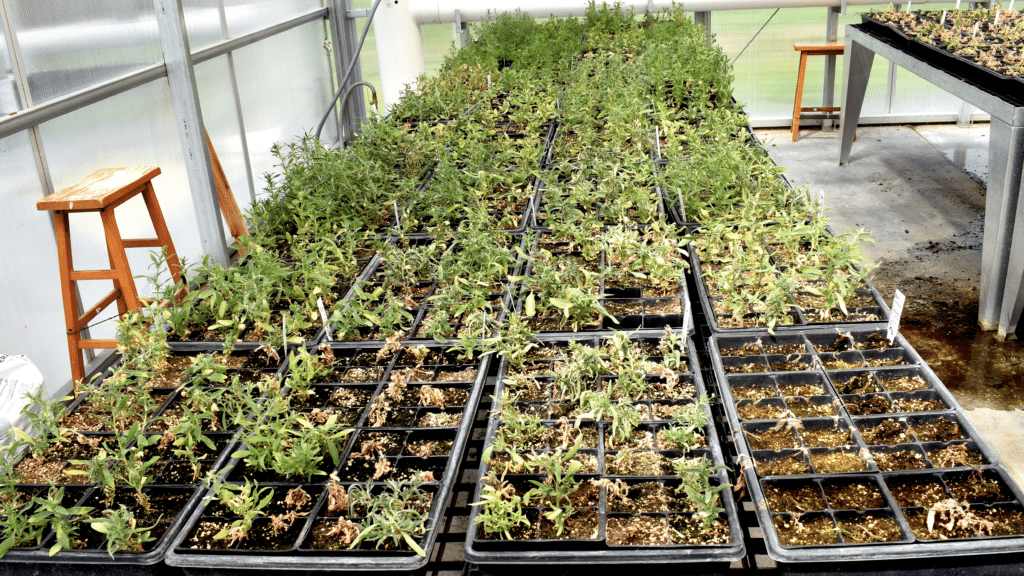
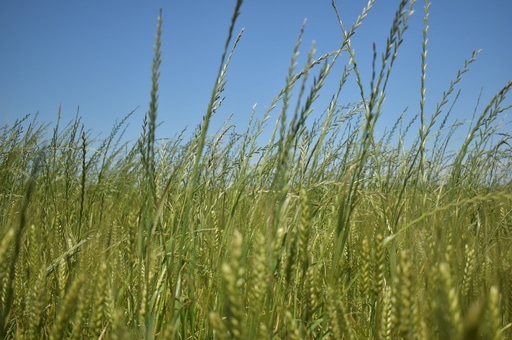
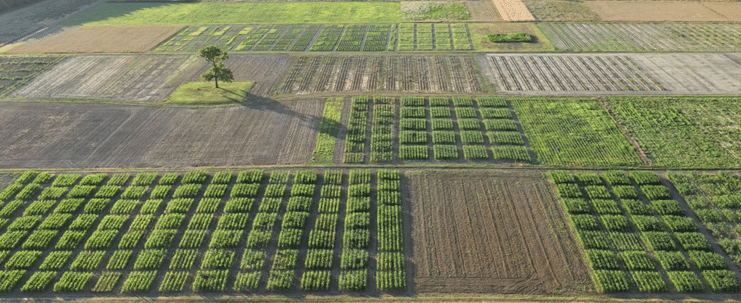
The researchers pit four popular cover crops (hairy vetch, cereal rye, wheat, and rapeseed) head-to-head to understand how each would fare under different termination timings. Those timings included four weeks before planting, two weeks before planting, one week before planting, and at-planting. Researchers terminated cover crops via roll-crimping and the herbicide applications.
Cover Crop Biomass Builders
Across all termination timings, Kumar and Singh found that hairy vetch reigned supreme at producing an average cover crop biomass of 4,479 pounds per acre. Cereal rye was the runner-up with 3,913 pounds per acre of biomass.
Wheat had a biomass of 3,458 pounds per acre, and rapeseed came in last with just 2,297 pounds per acre of biomass.
Rapeseed didn’t just accumulate little biomass, it also shrugged off termination. This cover crop only partially died 21 days after termination. Singh’s previous research has already studied rapeseed’s problem as a volunteer crop, and he emphasizes that poor termination could contribute to that volunteerism.
Time Your Termination to Swamp Weeds with Biomass
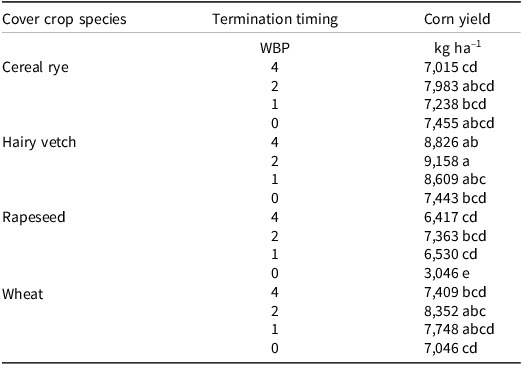
Those results and corn considerations indicate one-to-two weeks before planting is a Goldilocks zone for cover crop termination that retains yields and suppresses weeds for mid-Atlantic growers.
The highest corn yield in this study came from the hairy vetch cover crop terminated two weeks before planting (136 bushels per acre). Terminating cereal rye two weeks before planting also had the highest corn yield for that cover crop (118 bushels per acre).
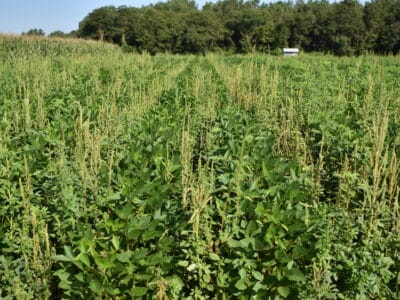
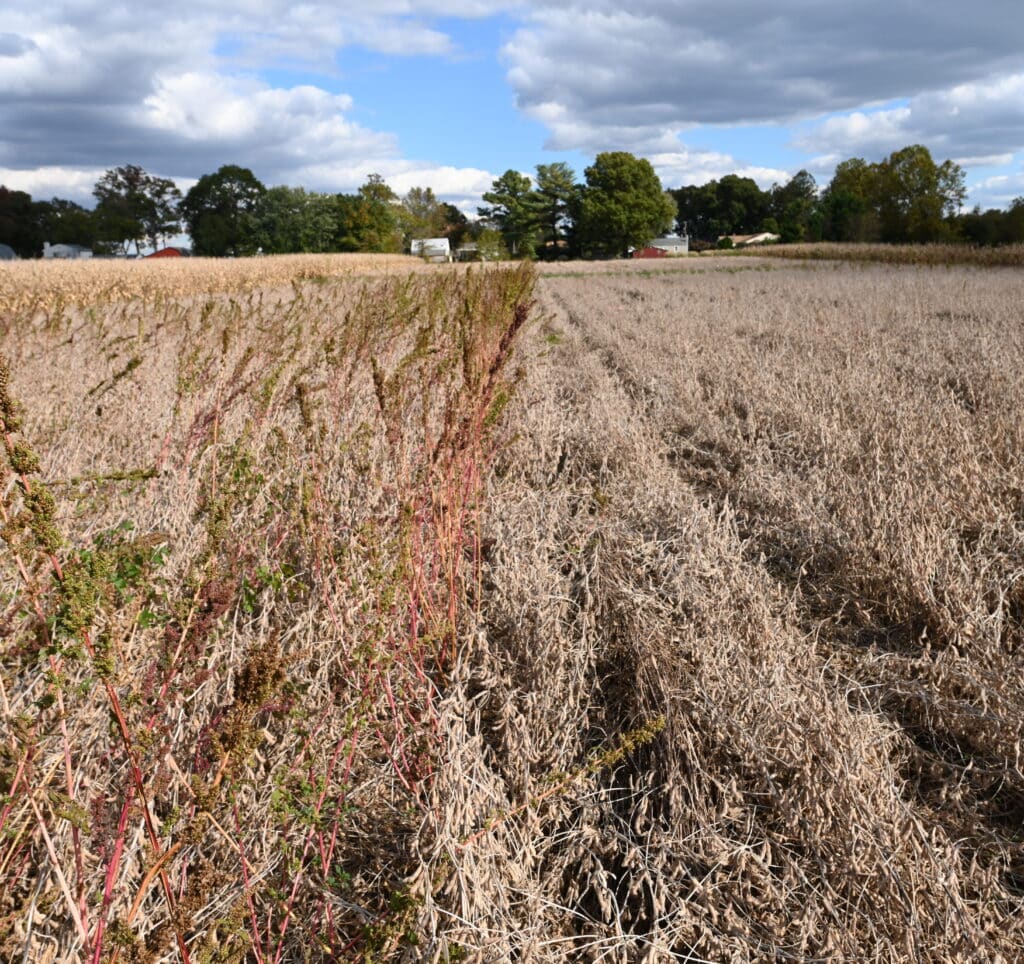
Terminating any of the cover crop species two weeks before planting resulted in 11% and 25% less grass and small-seeded broadleaf weed density compared to terminating four weeks before planting, respectively.
“If we terminate cover crops late, like at the time of planting corn, we won’t be able to kill the cover crop well,” Singh explains of the late termination timing.
Terminating at planting could also make the cash and cover crops compete for nutrients, especially in droughts. That’s because it can take up to 12 days for cover crops to completely die after termination. Even that brief 12-day period can negatively impact your corn’s growth and yield. “If the corn isn’t healthy, what’s the point of managing weeds?” Singh asks.
Takeaways and Potential for Integrated Weed Management
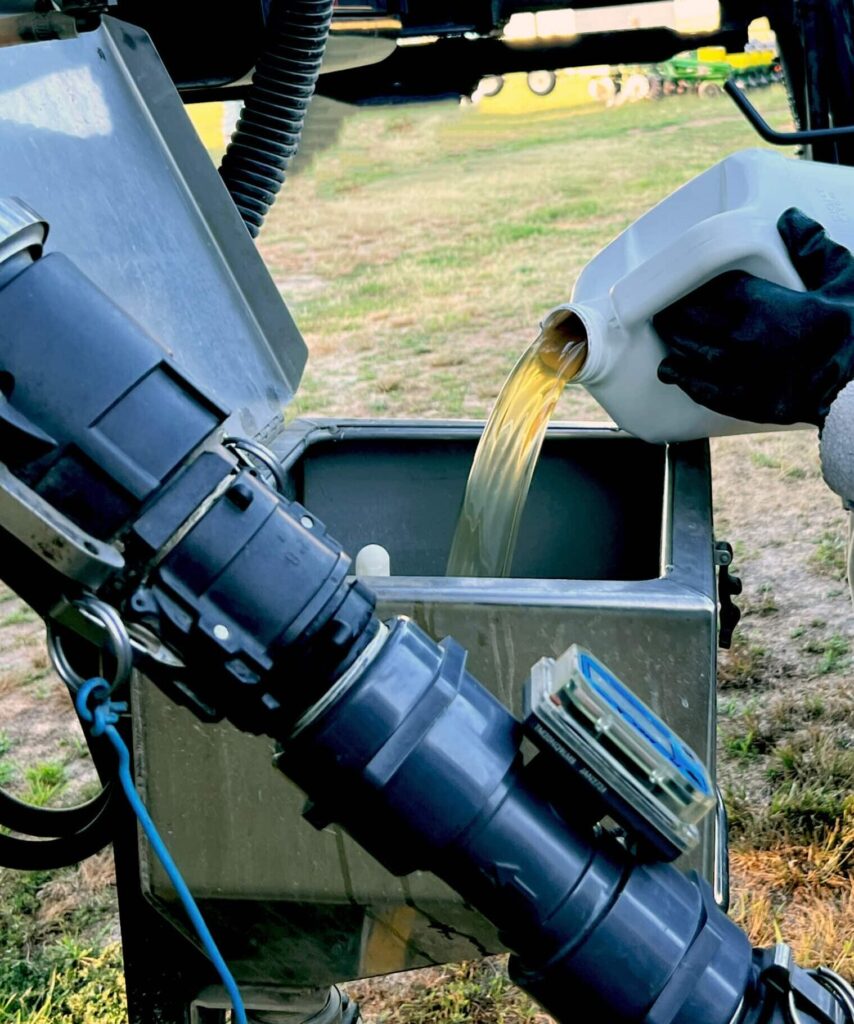
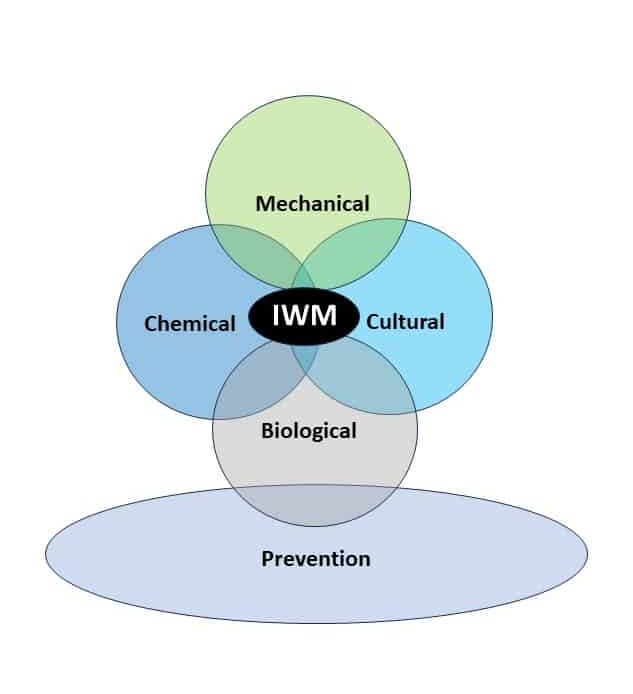
Singh and Kumar also demonstrated the power of integrated weed management in their study by combining cover crops with a standard pre- and postemergent herbicide regime. Researchers measured weed densities 28 days after corn planting, around the time when farmers would apply their postemergence herbicides, Singh says. “When you apply the postemergent herbicide, you are assuming that the cover crop has already done its work,” Singh explains.
The cover crop and preemergent herbicide combo can handle weeds during the 28-day period after planting, and then postemergent herbicides can help pick up the slack.
Singh sums his study’s findings into this recommendation: Choose a cover crop species with a booming biomass, and terminate around a week or two before corn planting to maximize your weed suppression and protect your corn yield.
“We always suggest growers use integrated weed management approaches.” Singh recommends. “Don’t just use herbicides, use them with cover crops or other tillage practices to help control weeds effectively.” Virginia’s best-management-practices cost share program can help farmers implement cover crops and manage their price tags.
Explore GROW’s website for more information on cover crop management and termination.
Article by Amy Sullivan, GROW; Header and feature photo by Claudio Rubione, GROW.